Tracing the Development of Payline Alternatives in Modern Portable Casino Games and Their Effects on Reward Distribution Models
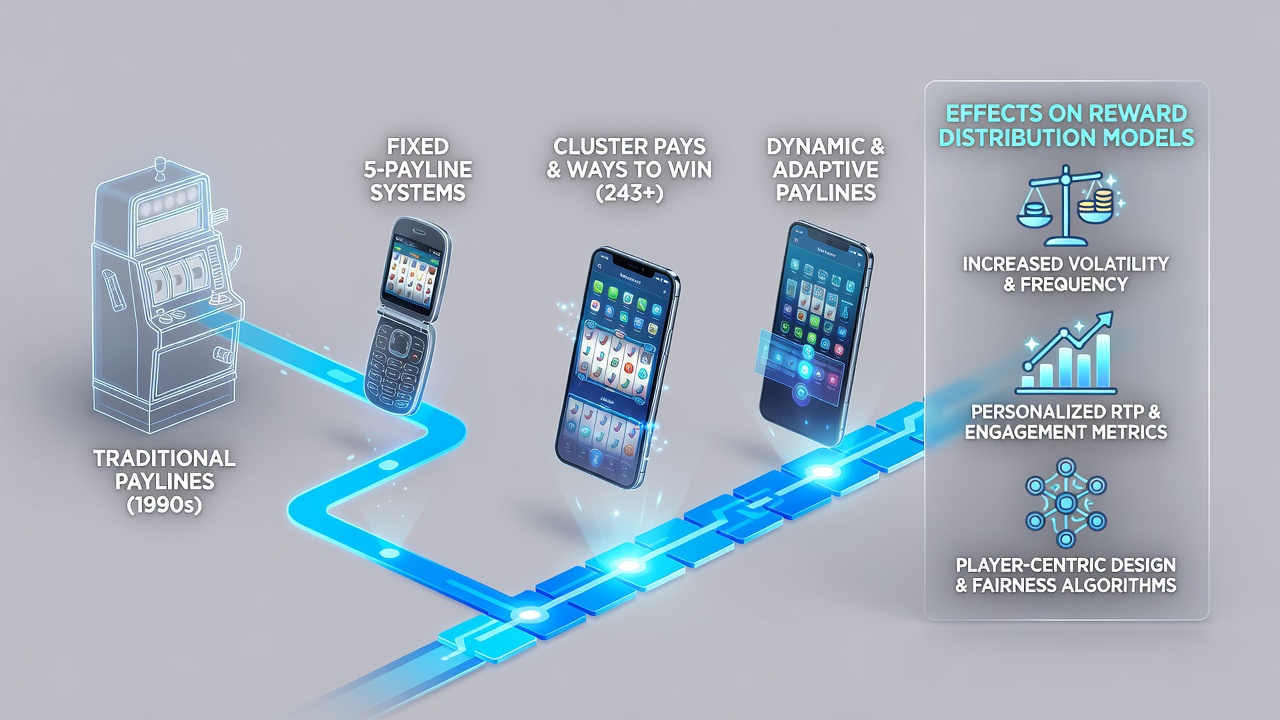
Traditional payline structures once dominated slot design, yet developers began exploring alternatives as portable devices gained popularity in the mid-2010s. These shifts altered how symbols align and how rewards calculate across reels, moving away from fixed lines toward dynamic systems that evaluate combinations in new patterns.
Early Experiments with Multiway and All-Ways Configurations
Game providers introduced multiway setups around 2010, where adjacent symbols paid regardless of exact line positioning. This approach expanded winning chances because reels evaluated matches from left to right across all possible paths. Data from industry analyses show these systems increased hit frequency in base games while maintaining similar overall return percentages through adjusted symbol weighting.
Portable platforms accelerated adoption since touch interfaces allowed players to visualize expanding grids without physical buttons. Observers note that multiway mechanics distributed smaller payouts more evenly across sessions compared to classic three-reel formats, which concentrated rewards on fewer high-value lines.
Megaways Mechanics and Variable Reel Expansion
Big Time Gaming launched Megaways in 2016, creating up to 117,649 ways through changing reel heights each spin. The system randomizes symbol counts per reel, which directly affects how often combinations form and how prize pools distribute. Studies from gaming technology reports indicate this variability raises volatility because players encounter both dense winning screens and sparse ones within short sequences.
By June 2026 mobile adaptations had refined Megaways implementations with optimized rendering for smaller screens, allowing seamless transitions between expanded and standard views. Reward models evolved accordingly as providers recalibrated paytables to balance the increased number of potential outcomes, often resulting in more frequent low-tier awards that offset rarer larger hits.
Cluster Pays and Symbol Grouping Innovations
Cluster pays emerged as another departure from lines, requiring groups of adjacent matching symbols rather than linear alignments. NetEnt's early titles demonstrated how these mechanics trigger cascades when clusters clear, opening space for new symbols to drop. Research from international gaming associations reveals cluster systems tend to produce streak-like reward patterns, where multiple payouts occur in succession before the screen resets.

Portable casino applications integrated these features with gesture controls that let users swipe to initiate cascades manually in some variants. The effect on distribution appears in session data where total return stays consistent yet individual win sizes spread across more events, reducing the gap between consecutive payouts. Canadian regulatory summaries highlight similar trends in licensed markets where cluster titles showed steadier engagement metrics than line-based counterparts.
Pay-Anywhere and Positionless Evaluation Systems
Pay-anywhere designs eliminate positional requirements entirely, crediting any matching symbols that appear anywhere on the grid. This model gained traction in mobile releases after 2020 because it simplifies visual processing on compact displays. Figures from European gaming research centers indicate these frameworks redistribute prize allocation by increasing the baseline hit rate, which providers counterbalance through modified multiplier frequencies or bonus trigger rates.
Developers further combined pay-anywhere with hold-and-win features, locking symbols in place while respins continue. The layered mechanics stretch session lengths because additional spins accumulate without new wagers, altering how operators model average revenue per user over time.
Integration with Progressive and Jackpot Structures
Alternative pay systems influenced jackpot distribution as well. Tiered progressives now attach to cluster or Megaways evaluations, allowing contributions from smaller bets to build shared pots across wider player bases. Australian industry reports document how these hybrids maintain regulatory compliance on return-to-player percentages while shifting emphasis toward communal reward pools rather than individual line hits.
Portable formats support real-time updates to jackpot meters through cloud connections, keeping distribution transparent during active play. Observers note that June 2026 data releases from multiple jurisdictions showed stable participation levels in these titles despite broader market adjustments.
Conclusion
Payline alternatives have reshaped reward distribution by expanding evaluation methods and recalibrating prize frequencies across mobile slots. Each innovation from multiway to cluster and pay-anywhere systems maintains overall return parameters through targeted adjustments in symbol probabilities and bonus structures. Industry tracking continues to document these patterns as portable gaming evolves further into 2026 and beyond.